

When we watch airplanes soar across the sky, most of us rarely think about what powers those massive machines. The secret behind their strength and speed lies in one critical element — jet fuel. Jet fuel is the lifeblood of aviation, designed to deliver high efficiency, stability, and performance even in extreme conditions.
Whether you’re a curious traveler, an aviation enthusiast, or someone in the oil and gas business, understanding jet fuel gives you a deeper appreciation of how the global aviation industry operates.

What Is Jet Fuel?
Jet fuel, commonly known as aviation turbine fuel (ATF), is a specialized type of fuel used to power aircraft engines. Unlike petrol or diesel used in cars, jet fuel is formulated to perform in low temperatures, high altitudes, and at incredible speeds.
It’s primarily made from kerosene, which is refined from crude oil. Depending on the aircraft type and engine design, two main types of jet fuels are used globally: Jet A/Jet A-1 (for commercial aircraft) and Jet B (used in very cold regions due to its lower freezing point).
How Jet Fuel Is Produced
Jet fuel starts its journey in oil refineries, where crude oil undergoes distillation to separate its various components. The kerosene fraction, found between gasoline and diesel, is then further refined and treated to remove impurities such as sulfur and water.
The refining process ensures the fuel remains chemically stable, resistant to freezing, and has the right combustion quality. These properties are vital for safe and efficient aircraft performance.
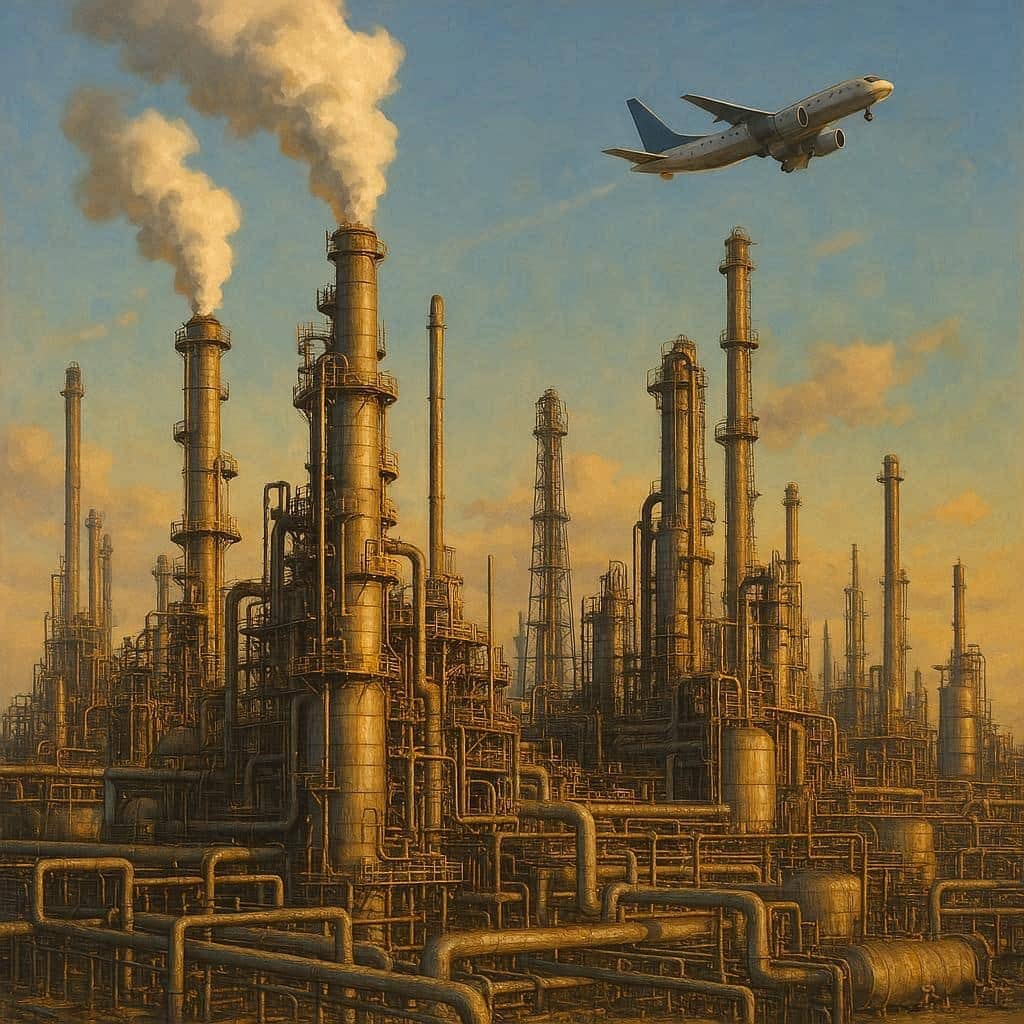
Global Demand for Jet Fuel
Jet fuel is a major player in the global energy market. As air travel continues to expand, especially in regions like Asia and Africa, the demand for jet fuel keeps rising.
For instance, before the pandemic, global jet fuel consumption was around 7 million barrels per day, accounting for nearly 8% of total oil demand. Though demand dropped during lockdowns, the aviation sector has rebounded strongly, and jet fuel consumption is climbing again.
This rising demand creates new opportunities for oil and gas companies, including refineries and distributors, to tap into the aviation market.
The Science Behind Jet Fuel Efficiency
Jet fuel is engineered to deliver maximum energy per kilogram, making it extremely efficient. One liter of jet fuel contains about 35 megajoules of energy, which is roughly 30% more than gasoline.
That’s why planes can travel thousands of miles without refueling. The efficiency also depends on engine technology; modern turbofan engines, for example, can convert jet fuel energy into thrust with remarkable precision, improving performance and reducing carbon emissions.
From Refinery to Runway
Let’s take a look at a simplified example:
The Dangote refinery in Lagos, Nigeria, produces jet fuel that meets Jet A-1 specifications. This fuel is transported by tanker trucks to major airports like Abuja or Enugu, where it’s stored in dedicated aviation tanks.
Before refueling an aircraft, the jet fuel undergoes quality checks — including water separation, density, and flashpoint testing — to ensure it meets safety standards. From there, it’s pumped into the aircraft’s fuel tanks, ready to power engines across continents.

The Future of Jet Fuel: Toward Sustainability
As the world focuses on reducing carbon emissions, aviation companies are exploring Sustainable Aviation Fuel (SAF) — a cleaner alternative to conventional jet fuel. SAF can be produced from biomass, waste oils, and even algae, offering up to 80% fewer carbon emissions over its lifecycle.
While it’s still more expensive than traditional jet fuel, major airlines and governments are investing heavily in this technology. The goal is to make eco-friendly fuel jet the standard for future air travel.
Conclusion
Jet fuel is far more than just another petroleum product — it’s the lifeblood of global aviation. From refining crude oil to powering jet engines, it represents engineering excellence and energy precision.
As technology evolves, the future of jet fuel will balance efficiency, safety, and environmental sustainability. keeping the world connected one flight at a time.
Frequently Asked Questions (FAQ)
1. What is jet fuel made from?
Jet fuel is mainly made from kerosene, a refined petroleum product derived from crude oil.
2. How is jet fuel different from petrol or diesel?
It has a higher energy density, burns cleaner at high altitudes, and can withstand extreme temperatures.
3. How much does jet fuel cost?
Prices vary by country, but on average it ranges between $0.70 – $1.20 per liter, depending on oil market trends.
4. Can jet fuel be used in cars?
No. It’s designed specifically for aircraft engines and would damage car engines if used.
5. What is sustainable aviation fuel (SAF)?
SAF is an eco-friendly version of jet fuel made from renewable resources such as plants or waste oils.
Leave a Reply