
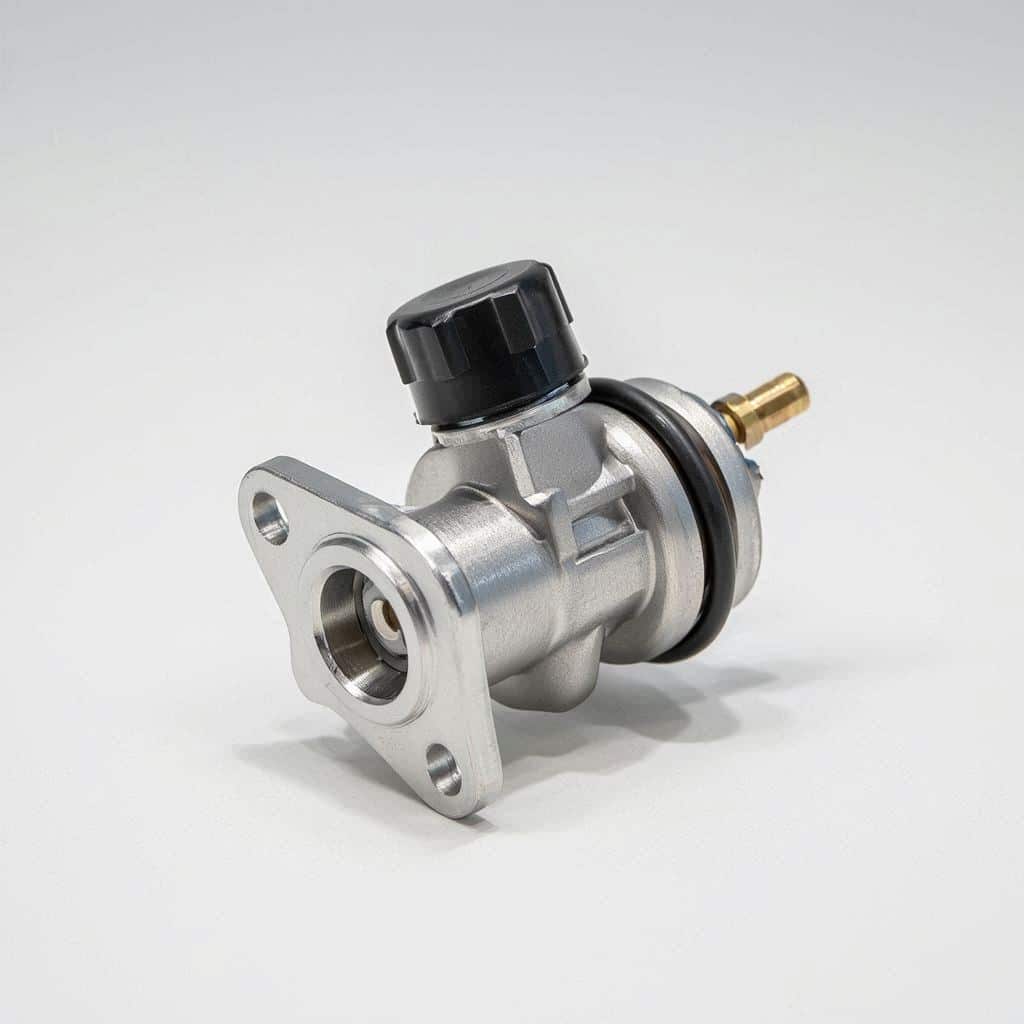
Imagine this: you’ve been driving your usual route to work for years. You know exactly when you’ll need to hit the gas station. But lately, you’ve noticed the needle on your fuel gauge is dropping faster than a lead weight. You haven’t changed your driving habits, and there are no puddles of gas under the car.
It feels like someone is siphoning your tank overnight. In reality, the culprit might be a small, unassuming cylinder under your hood: the fuel pressure regulator (FPR).
In 2026, with fuel prices remaining a significant part of the monthly budget, a failing regulator isn’t just a mechanical annoyance; it’s a direct drain on your bank account. Here is why this specific part might be stealing your gas and how to catch it in the act.
<<<Check cheap cars with low fuel consumption here>>>
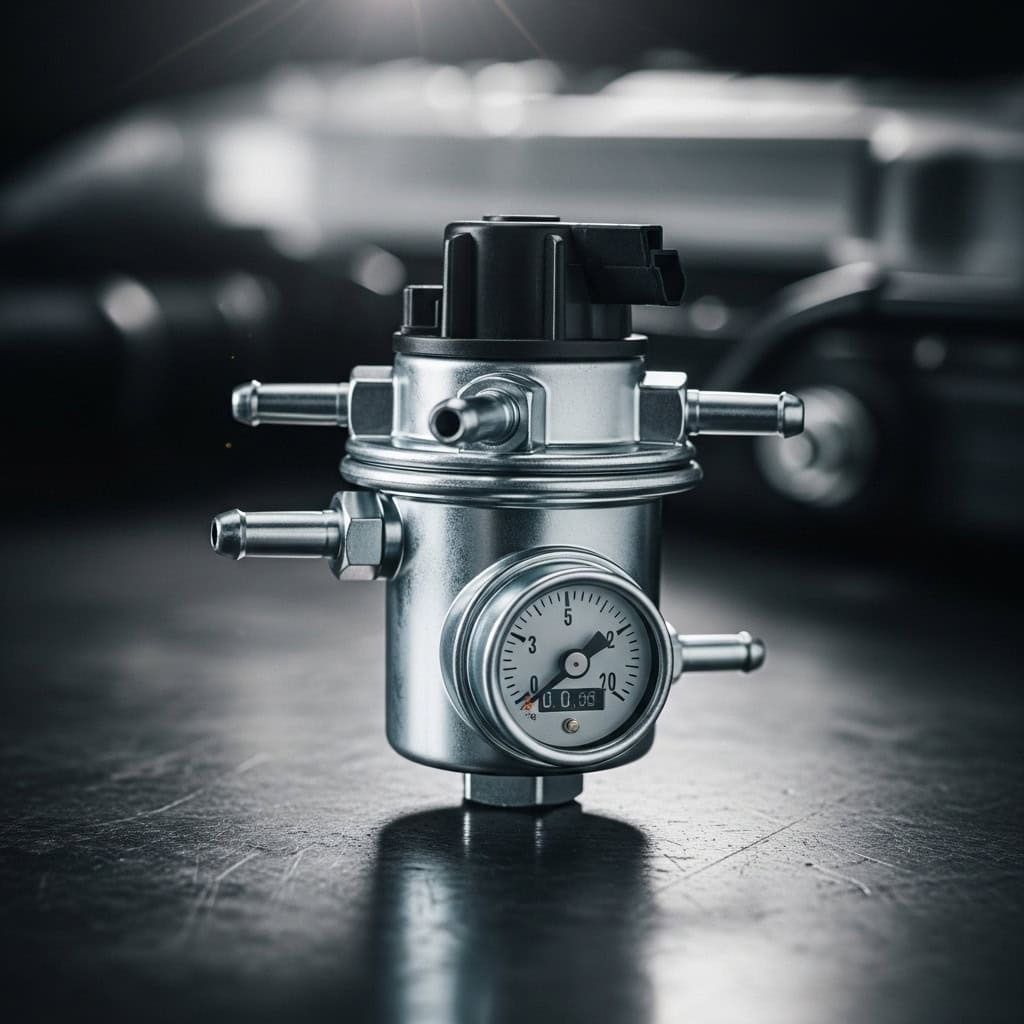
What Does a Fuel Pressure Regulator Actually Do?
Think of the fuel pressure regulator as the “gatekeeper” of your engine’s diet. Your fuel pump sends a constant, high-pressure stream of gasoline toward the engine. However, the engine doesn’t always need that full blast.
The regulator’s job is to maintain a steady pressure, usually measured in $PSI$ (pounds per square inch), to the fuel injectors. When the pressure gets too high, the regulator opens a valve and sends the excess fuel back to the tank via a return line.
The Problem: When the regulator fails, it usually fails in one of two ways: it either “starves” the engine or, more commonly for fuel-drain issues, it “overfeeds” it.
How It Drains Your Fuel Fast: The “Rich” Condition
When a regulator gets stuck in the closed position or its internal diaphragm ruptures, the fuel pressure at the injectors skyrockets. Instead of a fine, controlled mist, the injectors start “fire-hosing” fuel into the combustion chamber.
This creates what mechanics call a “Rich Mixture,” too much fuel and not enough air.
- Wasted Energy: Your engine can only burn so much gas at once. The excess unburnt fuel is simply pushed out through the exhaust.
- Computer Compensation: Your car’s computer (the ECU) sees the imbalance and tries to adjust, but a mechanical failure in the regulator often overrides these digital corrections, leading to a constant, heavy flow of wasted gasoline.
3 Warning Signs Your Regulator is Stealing Your Gas
If you suspect your fuel pressure regulator issues are behind your poor mileage, look for these specific red flags:
1. The “Black Smoke” Signal
Unlike oil smoke (which is blue) or coolant leaks (which are white), fuel smoke is thick and black. If you notice a dark puff when you rev the engine or accelerate away from a stoplight, your regulator is likely forcing too much fuel into the system.
2. Carbon-Fouled Spark Plugs
If you pull a spark plug and find it covered in dry, black, sooty buildup, that is “carbon fouling.” This happens when the air-fuel mixture is so rich that the plug can’t burn it all off. This soot eventually causes misfires, making your fuel economy even worse.
3. The “Vacuum Hose” Test (The Smoking Gun)
Most mechanical regulators use a vacuum hose to sense engine load. If the internal rubber diaphragm inside the regulator rips, fuel will be sucked directly through that vacuum hose and into the intake manifold.
- How to check: With the engine off, pull the small vacuum line off the regulator. If gas drips out of the line, the diaphragm is ruptured. This is an immediate fail and a major fire hazard.
Diagnostic Comparison: Regulator vs. Other Issues
| Symptom | Fuel Pressure Regulator | Clogged Fuel Filter | Failing Fuel Pump |
| Fuel Economy | Sharp Decrease (Rich) | Slight Decrease (Lean) | Slight Decrease (Lean) |
| Exhaust Smoke | Black | None | None |
| Starting | Hard Start (Flooded) | Hard Start (Starved) | Long Crank Times |
| Spark Plugs | Black/Sooty | White/Blistered | White/Blistered |
The “Invisible” Cost: Engine Dilution
Beyond the gas station bill, a bad regulator can destroy your engine from the inside. When too much gas enters the cylinders, it “washes” the lubricating oil off the cylinder walls. That raw gas then drips down into your oil pan.
Check your dipstick: If your oil smells strongly of gasoline or the level seems “higher” than it was last week, stop driving immediately. Your oil is being diluted by fuel, which can lead to total engine failure.
Conclusion
A faulty fuel pressure regulator is a silent thief. It doesn’t always cause a breakdown, but it ensures you pay a “tax” every single mile you drive. In 2026, with modern diagnostic tools being more accessible than ever, there is no reason to let a $60–$150 part cost you thousands in wasted fuel and engine wear.
If your mileage has taken a nosedive and you smell gas in the exhaust, it’s time to check the gatekeeper.
Leave a Reply