
Let’s be honest: there is a specific kind of “pump anxiety” that hits right as you pull into a filling station. You look at the digital display, see the price per litre, and do some quick mental gymnastics. “Wait, if I put in ₦10,000, will that even get me to the state line?”
In 2026, navigating fuel prices has become something of a sport. Whether you’re a weekend warrior heading out for a getaway or a professional driver clocking thousands of kilometers, the “guesswork” method of budgeting for fuel is officially dead. It’s frustrating, it’s stressful, and frankly, it’s unnecessary.
I’ve spent way too many trips realized halfway through that I didn’t budget enough for the return leg. That’s why we developed the Fuel Cost Trip Calculator. It’s a simple, no-nonsense tool designed to take the “math-induced headache” out of your travel plans.
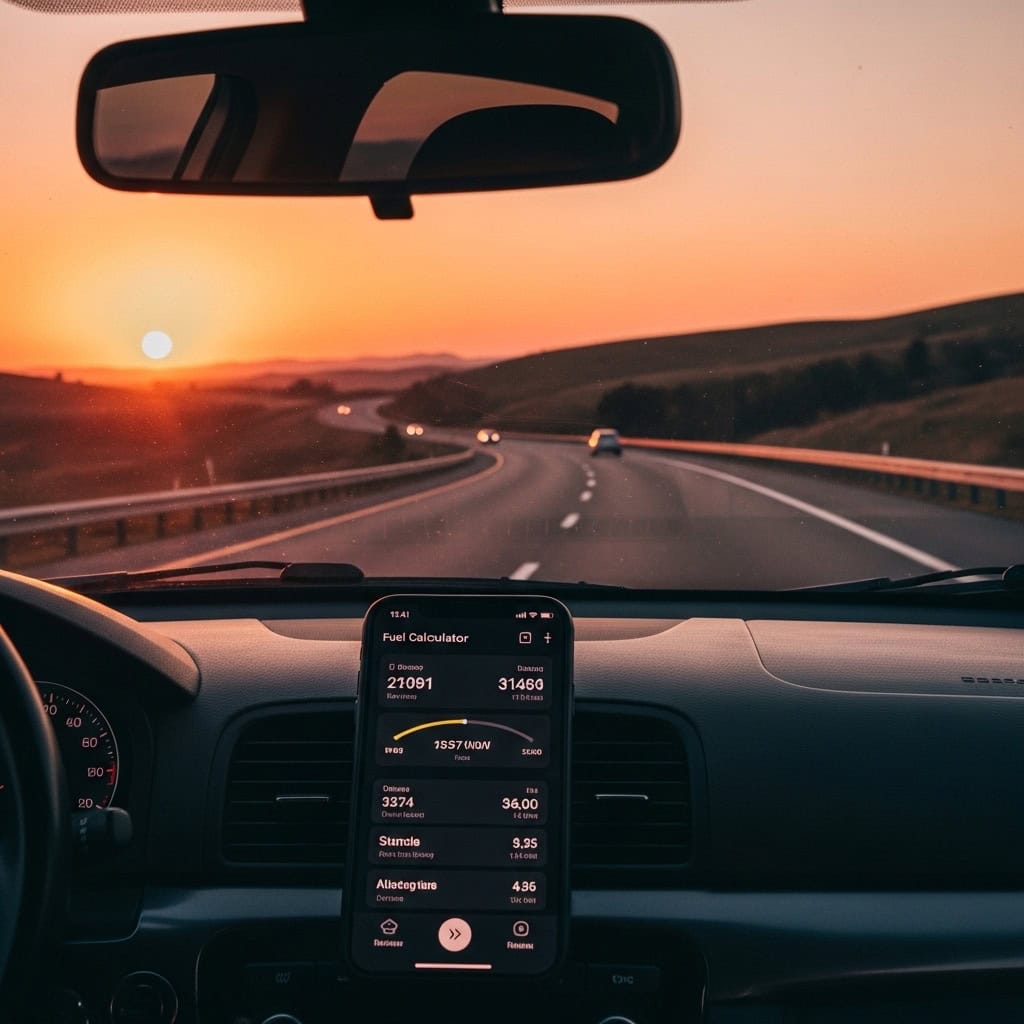
Why “Guesstimating” Your Fuel Cost is Costing You Money
Most people calculate fuel by saying, “My tank is half full; that should be enough.” But “enough” is a dangerous word when you’re 200km away from the nearest reliable station.
When you don’t use a Fuel Cost Trip Calculator, you’re ignoring three critical variables:
- Fluctuating Prices: Fuel prices in Nigeria and globally aren’t static. What you paid last Tuesday might not be what you pay today.
- Vehicle Efficiency: Your car doesn’t burn fuel at the same rate when it’s loaded with luggage versus when it’s empty.
- The “Hidden” Kilometers: Traffic diversions, wrong turns, and city driving burn significantly more fuel than steady highway cruising.
By using a dedicated tool, you turn a “vague idea” into a concrete budget. You know exactly how much to set aside, which means you can spend more time thinking about your destination and less time staring at your fuel gauge.
How to Use the Fuel Cost Trip Calculator (Like a Pro)
We built this tool to be as lean and fast as possible. You don’t need a degree in mechanical engineering to use it. Here’s the breakdown of the three things it needs from you:
1. Trip Distance (km)
This is the total distance you plan to cover. Don’t just put the distance to your destination; remember to double it if you’re coming back!
- Pro Tip: Use Google Maps to check for the “fastest” vs. “shortest” route. Sometimes the shorter route has more stop-and-go traffic, which actually uses more fuel.
2. Car Fuel Consumption (km per litre)
This is the “magic number.” It tells you how far your car can travel on just one litre of fuel.
Wait, how do I find my “km per liter”? If you aren’t sure, a good rule of thumb for many mid-sized cars is around 10–12 km/l. If you’re driving a heavy truck or SUV, that number might drop to 6–8 km/l.
- Where to find it: Most cars made after 2015 have this on the digital dashboard (often labeled as “Average Fuel Economy”).
- The Manual Way: If your car is older, fill your tank, reset your trip meter to zero, drive until you’re at half a tank, then refill. Divide the kilometers driven by the litres you just put in.
3. Fuel Price per Litre (₦)
This changes daily. To make sure your calculation is 100% accurate, you should always check today’s fuel price in Nigeria before hitting the “Calculate” button.

The Math Behind the Calculation
For the nerds like me who want to know what’s happening under the hood, the Fuel Cost Trip Calculator uses a straightforward formula. If you were to do it by hand (which, let’s face it, nobody wants to do on a Saturday morning), it looks like this:
$$Total Cost = \left( \frac{Distance}{Consumption} \right) \times Price$$
Where:
- Distance is your total kilometers.
- Consumption is your vehicle’s efficiency (km/l).
- Price is the current Naira per litre.
For example, if you’re driving 500km in a car that gets 10km/l, you’ll need 50 litres of fuel. If petrol is ₦700/L, your total cost is ₦35,000. Simple, right? But the calculator does all this instantly, including formatting and tips!
5 Practical Ways to Beat the Calculator
The calculator gives you an estimate based on your car’s standard performance. But what if you want to actually spend less than what the tool predicts? Here are five human-tested ways to improve your fuel economy:
1. The “Egg Under the Pedal” Technique
Imagine there is a raw egg under your accelerator pedal. You want to press it firmly enough to move, but not so hard that you “break the egg.” Smooth, gradual acceleration can improve your fuel economy by up to 20% compared to aggressive driving.
2. Check Your Tires (Seriously)
Driving with under-inflated tires is like trying to run through sand. It creates massive rolling resistance. Check your tire pressure at least once a month. It’s the easiest “free” way to save money on fuel.
3. Use the AC Wisely
At low speeds (city driving), keeping the windows down is more efficient. However, at high speeds (over 80km/h), open windows create “aerodynamic drag,” making the engine work harder. On the highway, it’s actually better to roll up the windows and use the AC.
4. Declutter Your Trunk
Every extra 45kg (100 lbs) in your car reduces your fuel economy by about 1%. If you’re carrying around heavy tools, old gym equipment, or “just in case” items you never use, leave them at home.
5. Plan Your Stops
Cold starts burn more fuel. If you have three errands to run, do them all in one trip while the engine is already warm, rather than three separate trips throughout the day.
Why Accuracy Matters for Your Wallet
In an era of inflation and economic shifts, every Naira counts. When you use the Fuel Cost Trip Calculator, you aren’t just “planning a trip”; you are practicing “Financial Self-Care.”
Imagine the peace of mind knowing that when you pull up to that pump, the total on the screen is exactly what you expected. No stress, no checking your bank balance at the last second, just a smooth transaction and back to the road.
That’s the goal of JEDIK Global Energy. We believe energy should be safe, affordable, and most importantly, reliable. This tool is just one small way we’re trying to make your daily life a little bit easier.

Frequently Asked Questions (FAQ)
1. How accurate is the Fuel Cost Trip Calculator?
The calculator is mathematically perfect, but the result depends on the accuracy of the data you input. If you enter an outdated fuel price or an overly optimistic fuel consumption rate for your car, the result will vary. Always use the most recent data for the best results!
2. Does the calculator work for Diesel and Gas (CNG) too?
Yes! As long as you know your consumption (km per litre or km per kg) and the current price of the fuel you are using, the tool works perfectly for petrol, diesel, or even compressed natural gas.
3. What is a “good” fuel consumption rate?
For a standard sedan in 2026, anything above 12 km/l is considered quite good. For SUVs, 8–10 km/l is standard. Hybrid vehicles can often reach 20 km/l or higher.
4. Can traffic affect the final cost?
Absolutely. The calculator assumes a “steady” trip. If you know you’ll be sitting in heavy Lagos or Abuja traffic for two hours, it’s a good idea to add about 10–15% to your “Distance” input to account for the fuel burned while idling.
5. Why should I use this tool instead of just guessing?
Guessing leads to “budget creep.” By using the Fuel Cost Trip Calculator, you hold yourself accountable to a travel budget. It allows you to decide before you leave if a trip is worth the cost or if you should perhaps carpool or take a different route.
Final Thoughts
Driving should be a joy, not a chore. Whether you’re exploring the beautiful landscapes of Nigeria or just commuting to work, being prepared is the best way to enjoy the ride.
The next time you’re planning to hit the road, take 30 seconds to run the numbers. Use our Fuel Cost Trip Calculator, check the latest prices, and give your car a quick once-over. Your wallet (and your peace of mind) will thank you.
Safe travels out there!
Leave a Reply