
We’ve all been there: that sinking feeling in your stomach when your car starts to act up. You’re driving along, and suddenly the engine stutters. Or maybe you go to start it in the morning, and it cranks for ten seconds before finally catching.
My mind immediately goes to the “Big Repairs.” I start thinking about $1,500 fuel pumps, $3,000 transmission rebuilds, or a total engine overhaul.
Last year, I was convinced my car was on its deathbed. I spent weeks researching “engine replacement costs” and looking at new car listings. As it turns out, I was suffering from a classic case of overdiagnosis. The real culprit was a $25 part that I hadn’t changed in three years: the fuel filter.
Here are the specific fuel filter symptoms that tricked me into thinking my engine was toast, and here’s how you can avoid making the same expensive mistake.

The “Power Loss” I Thought Was a Dying Transmission
The most terrifying symptom happened when I was merging onto the highway. I stepped on the gas, the RPMs climbed, but the car felt like it was hitting a wall. It shuddered and refused to accelerate.
- My Fear: I thought the transmission was slipping or the “limp mode” was kicking in because of a catastrophic internal failure.
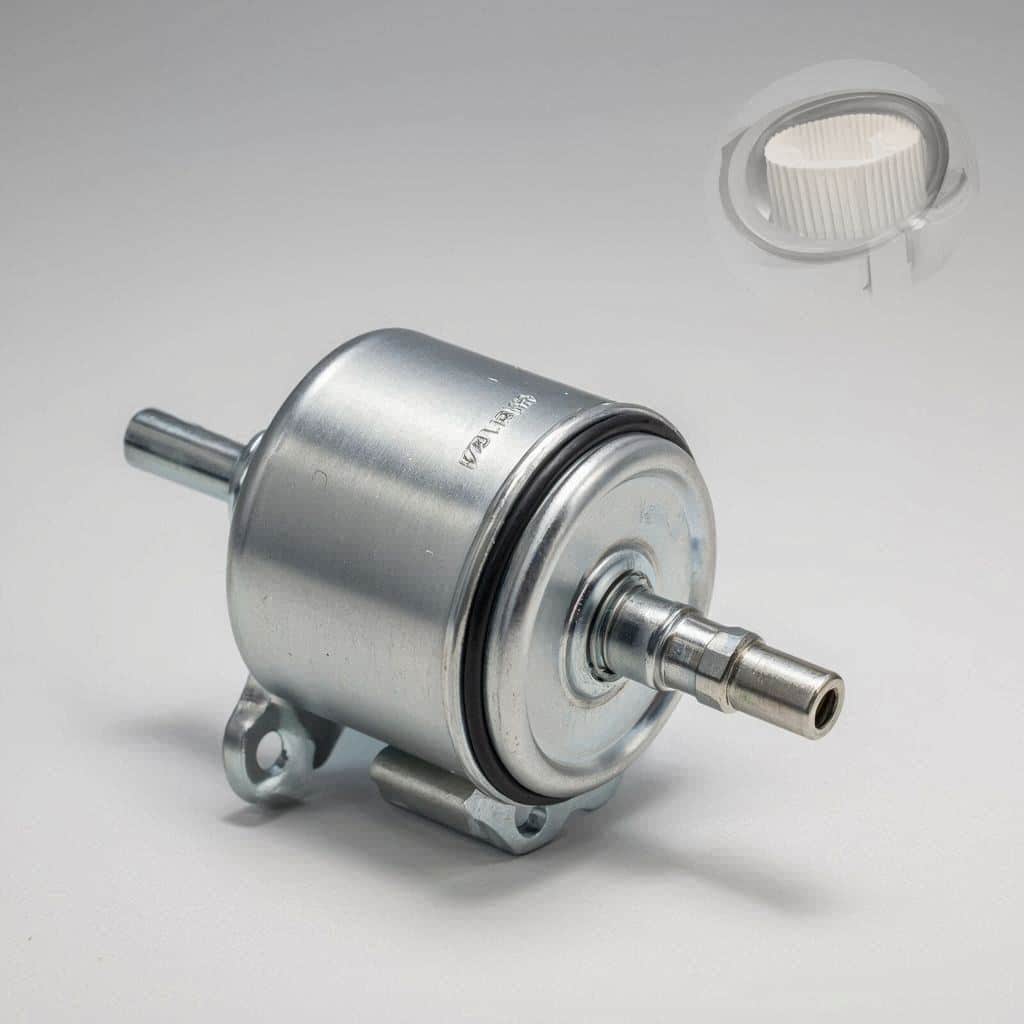
- The Reality: A fuel filter is designed to catch dirt, rust, and debris from the gas tank. When it’s clogged, it acts like a kinked garden hose. At low speeds, enough fuel gets through to keep you moving. But when you demand high power (like merging), the engine starves. It wasn’t a “slip”; it was a “starve.”
The “Hard Start” I Blamed on the Battery
For a month, my car took forever to start. I’d turn the key, and it would go crank-crank-crank-crank before finally stumbling to life.
- My Fear: I bought a new battery. Then I almost bought a new starter motor. I was sure the electrical system was failing.
- The Reality: Once the engine is off, a clean fuel system should maintain a bit of pressure. A heavily clogged filter makes it much harder for the pump to push fuel through to the injectors on that initial start. The “hard start” was just the time it took for the pump to fight its way through the gunk in the filter.
The “Great Deceiver” Table: Filter vs. Engine
If you’re experiencing these issues, use this table to see if you’re over-diagnosing a simple filter problem.
| Symptom | My “Big Problem” Guess | The Simple Fuel Filter Reality |
| Engine Misfiring | Blown Head Gasket / Bad Plugs | “Lean” misfire due to lack of fuel flow. |
| Stalling at Red Lights | Failing Alternator | Restrictive flow can’t maintain a steady idle. |
| Check Engine Light | Catastrophic Sensor Failure | Often triggers a “Lean Condition” code (P0171/P0174). |
| Strong Gas Smell | Leaking Fuel Tank | A clogged filter can cause back-pressure that stresses hose connections. |
The “Rough Idle” I Thought Was a Vacuum Leak
When I was stopped at a light, the car would vibrate so hard the coins in my cupholder would jingle. I spent a whole weekend spraying soapy water on my vacuum lines looking for a leak.
- The Reality: When the filter is partially blocked, the fuel pressure fluctuates. At idle, the engine needs a very precise, steady amount of fuel. The clogged filter creates “turbulent” flow, making the engine stumble. It felt like a massive vacuum leak, but it was just a dirty piece of paper inside a metal canister.
How to Test It (Before You Spend the Big Bucks)
If you suspect your fuel filter is the ghost in the machine, try these two things:
- Check the Maintenance Schedule: If you can’t remember the last time you changed it (or if it’s been more than 30,000 miles), just change it. It is the cheapest “insurance” you can buy for your engine.
- The “Blow” Test (For DIYers): If you remove the old filter, try blowing through it (on the inlet side). If you feel significant resistance, it was effectively a brick inside your fuel line. A new filter should feel like blowing through a straw.
Conclusion
Modern cars are so complex that we often jump to the most complicated (and expensive) conclusion first. But engines are simple at heart: they need air, spark, and fuel. If you take away the fuel, the engine will mimic almost every “catastrophic” failure in the book.
Before you let a mechanic talk you into a new fuel pump or a top-end rebuild, ask them to check the fuel pressure at the rail. It might just be a $25 filter standing between you and a perfectly running car.
Leave a Reply