

Most people think LPG danger comes from cylinders.
But anyone who works in the gas business long enough, like me at JEDIK Global Energy knows the truth:
Cylinders rarely fail. LPG Pipes fail more often.
And I learned this the hard way.
A few months ago, I went to my friend’s restaurant to inspect their gas setup. They complained the flame was “breathing,” rising and dropping like someone controlling it from outside. Many people blame regulators for this, but in my experience, if the flame behaves like that, the problem is deeper.
So I checked their LPG pipe, the rigid copper line running behind the wall.
And when I ran my hand across it, I felt something strange:
A tiny rough spot… exactly where the pipe passed through the wall hole.
I knew immediately:
This pipe is wearing out slowly, silently, and dangerously.
That incident made me realize many homes and restaurants don’t know how to check their LPG pipes. Hoses get attention, but pipes? People forget they exist.
So here’s how to spot trouble early, from someone who has seen more than 200 built-in installations.
1. The Wall-Pass Test : The Most Common Hidden Damage
Anywhere the pipe passes through a wall, cabinet hole, or wooden partition, friction happens.
Over months or years, the pipe slowly rubs against the surface.
Signs to check:
- Scratches
- Thin scraping marks
- Flattening or bruised edges
- Discoloration at the contact point
If your pipe touches concrete directly, that’s even worse; concrete “eats” copper over time.
I’ve seen pipes that looked new until you checked the wall-pass area.
That’s the danger zone.
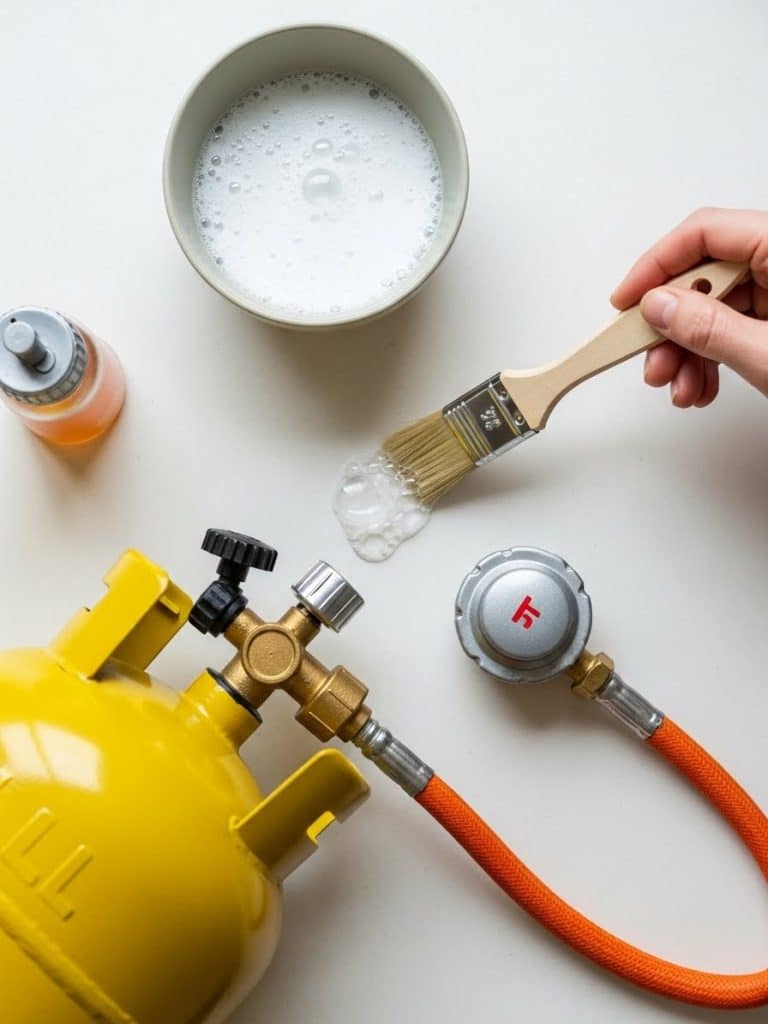
The Soap-Water Test for Micro-Leaks
This test saved a customer’s kitchen installation last year.
Mix:
- Liquid soap
- Small amount of water
Brush lightly on pipe joints, T-joints, elbows, or any place with fittings.
If you see steady bubbles, even tiny ones, the pipe has a micro-leak.
Not dramatic.
Not loud.
But dangerous.
Check the color; copper never lies.
Copper LPG pipes naturally darken over time. That’s normal.
But look for:
- Green stains (a sign of corrosion)
- White powder-like patches (chloride reaction)
- Deep brown or burnt-looking spots
- Wet-looking stains in dry areas
These colors often show where gas or moisture has been interacting with the pipe.
A pipe that changes color is a pipe telling you a story.
Look at the joints; 70% of Problems Live Here
Pipe joints are the weak link.
Common issues I’ve personally seen during inspections:
- Loose compression fittings
- Poor soldering
- Over-tightened joints
- Micro-cracks behind the flare nut
- Dusty or oily residue around the joint
- Misaligned angle connectors
If your pipe is perfect but the joints are bad, the entire system is unsafe.
Listen to the Sound
Most people don’t know this trick.
Tap the copper pipe gently with a metal spoon (not too hard).
Listen to the sound:
- Clear ringing tone → healthy pipe
- Dull, weak tone → thinning metal or internal corrosion
You can’t fake the sound.
Pipes “talk,” if you know how to hear them.
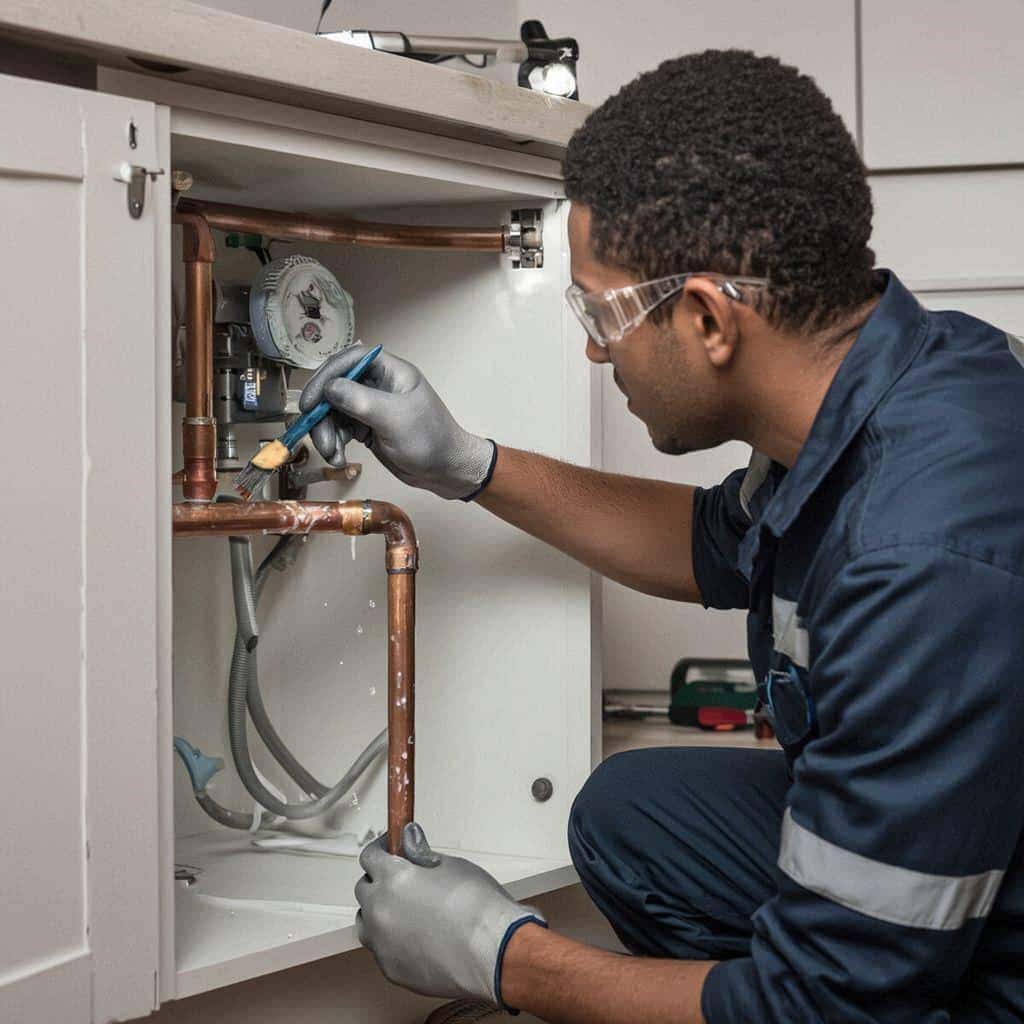
The Pressure Drop Test (For Restaurants and Built-Ins)
This test is simple but important.
If you turn your cylinder ON and:
- the flame takes 2–3 seconds to rise
- the flame is low even when the knob is high
- multiple burners suffer the same drop
…it means the pipe may be narrowing from inside due to oil residue or corrosion.
This is a sign many chefs ignore.
The Day I Found My Own LPG Pipe Problem
After that restaurant inspection, I went home and inspected my own built-in pipe.
Guess what?
The pipe behind my cabinet had green corrosion spots forming, probably from moisture trapped over time.
I didn’t wait.
I replaced the pipe the next morning.
It’s not fear.
It’s experience.
And if more households checked their pipes the way they check their cylinders, problems would reduce drastically.
Final Advice From the Station Yard
If you notice:
- discoloration
- scraping marks
- corrosion
- joint residue
- dull tapping sound
- micro-bubbles from soap test
Please repair or replace the pipe.
Built-in systems look beautiful, but beauty isn’t safety.
A good LPG pipe should last years, but only if you inspect it yearly.
And trust me, most people never do.
Leave a Reply