
The energy business is often described as “big,” but for those of us in the trenches, the station owners, the LPG retailers, and the independent oil traders, it is actually a game of inches. In 2026, a ₦5 difference in your landing cost isn’t just a minor detail; it’s the difference between a profitable quarter and a business that’s barely keeping the lights on.
I’ve sat with many independent marketers who can tell you their total revenue off the top of their heads, but when you ask about their net margin after accounting for evaporation, transport, and loading fees, they get a little quiet. In this industry, turnover is vanity, but margin is sanity.
That is why we’ve launched the Petroleum Margin Calculator. It’s more than just a simple “Price A minus Price B” tool. It’s a reality check for your business strategy, designed to help you see the hard numbers before you commit your capital.

The 2026 Energy Landscape: Why Margins Are Tighter Than Ever
As we navigate through 2026, the petroleum landscape in Nigeria has shifted. With the full operational capacity of local refineries and the deregulation of the downstream sector, the market has become hyper-competitive.
Gone are the days of fixed, stagnant margins. Today, prices at the depot change with the tide of the global market and the strength of the Naira. If you are an independent marketer, you are essentially a day trader in one of the most volatile commodities on earth.
Using a petroleum profit calculator isn’t just about seeing how much you made today; it’s about predictive budgeting. If you know your target margin is $8\%$, and the landing cost jumps by ₦10, you can instantly see how that affects your ability to cover your overheads.
How to Use the Petroleum Margin Calculator
We built this tool to be fast enough for a busy depot environment but detailed enough for a boardroom. Here is how you can break down your profitability in seconds:
- Buying Price per Unit (₦): This is your total landing cost per litre or per kilogram. Don’t just put the invoice price from the depot; include your transport and “hidden” loading fees here to get a true margin.
- Selling Price per Unit (₦): What are you actually charging at the pump or the scale?
- Quantity Sold (Litres or Kg): Your total volume for the day, week, or month.
Once you hit “Calculate,” the tool provides three vital pieces of data:
- Total Profit: The raw Naira amount in your pocket after cost of goods.
- Profit per Unit: The “micro-margin” that tells you if your pricing is competitive.
- Profit Margin (%): The most important number for scaling. If your margin is below $5\%$, you are in a high-risk zone for any price fluctuation.

The “Hidden Eaters” of Petroleum Profit
If the petroleum margin calculator shows you a profit of ₦500,000, but your bank account only shows ₦400,000 at the end of the month, you’re likely dealing with the “Hidden Eaters.” In the oil and gas business, there are three main factors that can turn a “paper profit” into a real-world loss:
1. Evaporation and Shrinkage (The “Invisible” Loss)
Fuel is volatile. It expands in the heat of the afternoon and shrinks in the cool of the night. If you buy 33,000 litres at a hot depot and discharge it into a cold underground tank, you might “lose” 100–200 litres just through temperature changes. Smart operators account for this in their petroleum expense calculator settings.
2. Discharge and Loading Fees
From the “union fees” at the depot to the logistics of getting the truck to your station, these small costs add up. Many traders make the mistake of leaving these out of their “Buying Price,” which artificially inflates their perceived margin.
3. Pump/Scale Inaccuracy
If your pumps are over-dispensing by even $0.5\%$, you are giving away your profit one litre at a time. Regular calibration is the only way to ensure the numbers on your fuel business calculator match the physical reality of your tanks.
Margin vs. Markup: Do You Know the Difference?
This is a common point of confusion for new traders.
- Markup is the percentage added to the cost price to get the selling price.
- Margin is the percentage of the selling price that is profit.
Our tool focuses on Margin because that is how you measure the health of a business. To calculate your margin manually, you use this formula:
$$Profit Margin = \left( \frac{\text{Selling Price} – \text{Cost Price}}{\text{Selling Price}} \right) \times 100$$
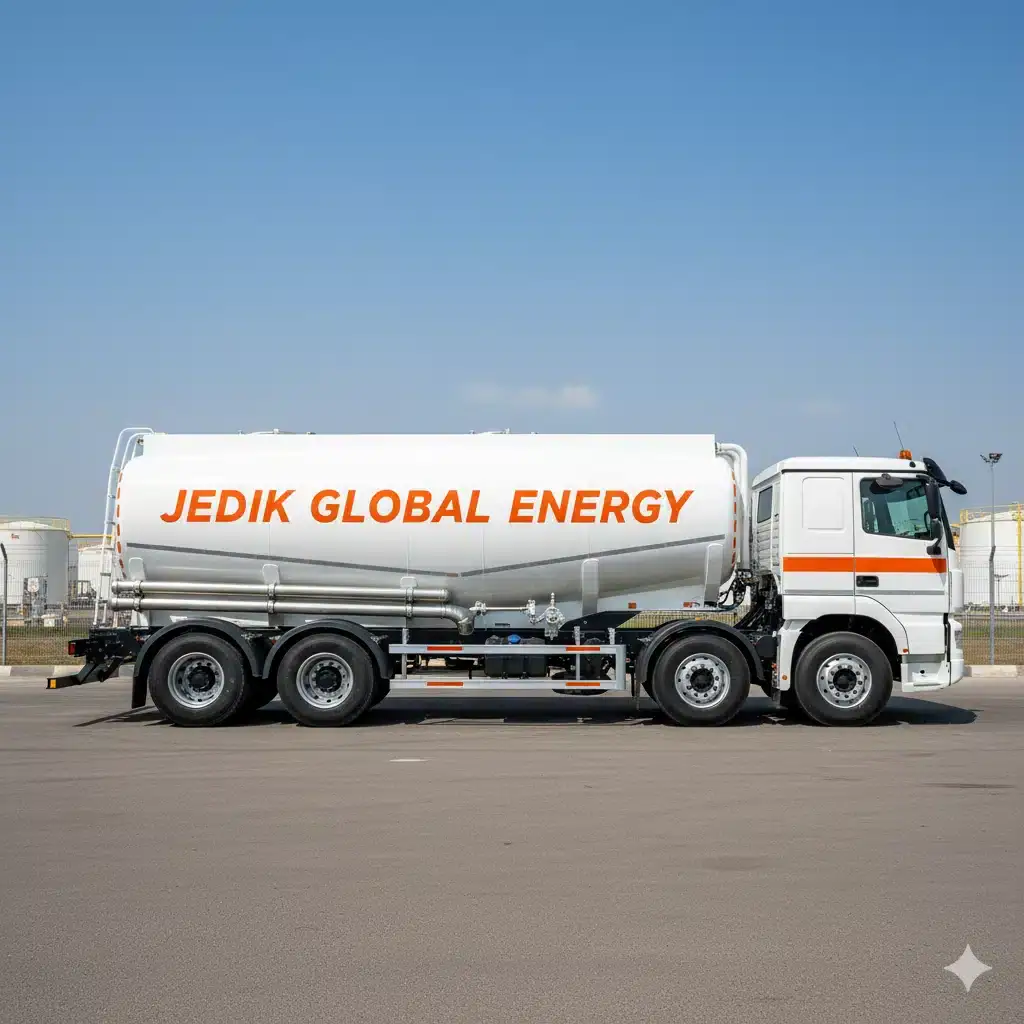
If you aren’t hitting your target margin, you have two choices: raise your selling price (which might drive away customers) or lower your buying price (which means finding a better supplier like JEDIK Global Energy).
Strategic Advice for High-Profit Energy Trading
Using a petroleum P&L calculator is the first step. The second step is using that data to make moves. Here are three strategies for increasing your margins in 2026:
1. The Volume Play
In a low-margin environment, volume is your best friend. If you can only make ₦10 per litre, you need to sell 100,000 litres to make ₦1,000,000. This is why many stations focus on “loyalty programs” or fleet contracts to ensure a steady, high-volume flow of customers.
2. Diversification (The LPG Advantage)
Petrol and Diesel margins can be notoriously tight because they are so heavily scrutinized by the public and regulators. LPG (Cooking Gas) often offers a wider margin and lower “shrinkage” than liquid fuels. Many successful entrepreneurs are using a petroleum profit calculator to see that adding a gas skidding plant to their existing petrol station dramatically increases their overall ROI.
3. Bulk Procurement
The “Buying Price” is the only number you have full control over. By partnering with a reliable bulk supplier like JEDIK Global Energy, you can often negotiate better landing costs that give you a ₦2–₦5 advantage over the station across the street. In this business, ₦2 per litre is enough to win the war.
Frequently Asked Questions (FAQ)
1. What is a “good” margin for a fuel station in 2026?
While it varies by region, most healthy independent stations aim for a gross margin between $6\%$ and $10\%$. This allows enough room to cover staff salaries, electricity (or generator costs), and maintenance while still providing a return on investment.
2. How does evaporation affect my petroleum margin calculator results?
You should factor in a “Loss Allowance” of about $0.3\%$ to $0.5\%$ of your volume. If you sold 10,000 litres, calculate your profit as if you only sold 9,950 to be safe.
3. Can I use this for both Petrol and LPG?
Absolutely. Just make sure you are consistent with your units. If you are calculating for LPG, use Kilograms (kg). If you are calculating for Petrol or Diesel, use Litres (L).
4. Why is my margin lower than my markup?
Because margin is calculated based on the selling price, which is a larger number than the cost price. It’s a more conservative and accurate way to look at your business’s take-home pay.
5. How often should I run these numbers?
Daily. In a market as fast as 2026, waiting until the end of the month to check your P&L is a recipe for disaster. Run your oil trading calculator every evening to see if you need to adjust your prices for the next day.
Conclusion: Data is Your Most Valuable Fuel
The energy sector is no longer for the “guessers.” It is for the analysts. It is for the people who know their numbers down to the last Kobo. Whether you are running a single pump or a fleet of tankers, your success depends on your ability to see through the “daily turnover” and find the actual profit.
Our Oil & Gas Profit Calculator is designed to give you that clarity. It’s simple, it’s mobile-friendly, and it’s built for the Nigerian energy entrepreneur.
Stop guessing and start growing. Use the tool above to analyze your last load of fuel, and see how much more profitable you could be by optimizing your margins. At JEDIK Global Energy, we aren’t just selling you fuel; we are helping you build a more profitable future.
Leave a Reply